
Saturday, March 21, 2026
Home Blog Page 54

The Advantages of Cross-Docking in Warehouse Management

0

We believe that optimizing your warehouse management processes can greatly benefit your business. One of the most effective ways to streamline your operations is through cross-docking. In this article, we will explore the many advantages of cross-docking and why it is becoming increasingly popular in warehouse management.

Contents

What is Cross-Docking?

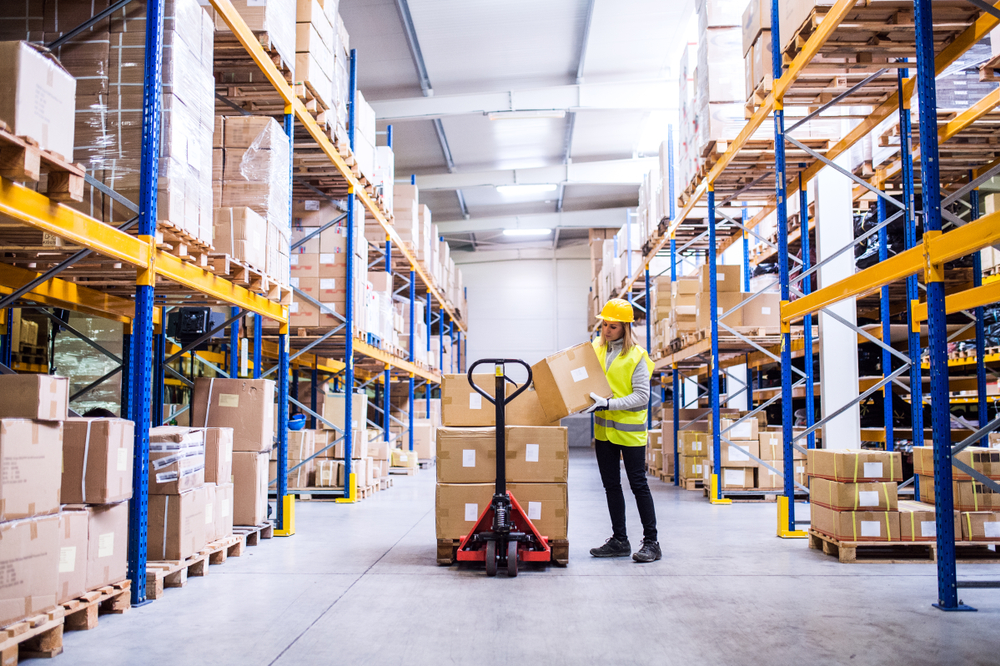
Cross-docking is a logistics practice where incoming goods are directly transferred from inbound trucks to outbound trucks with minimal handling or storage time. This technique enables goods to be shipped to their destination without spending time in inventory. Cross-docking requires efficient planning and execution to ensure that products are received, sorted, and loaded onto outgoing trucks quickly and efficiently.

Top 8 Benefits of a Warehouse Management System

Advantages of Cross-Docking

1. Improved Efficiency

One of the primary benefits of cross-docking is the improved efficiency of the supply chain. Cross-docking eliminates the need for intermediate storage and handling, reducing the time and costs associated with inventory management. By reducing handling and storage, products move faster through the supply chain, and lead times are minimized, resulting in quicker delivery times.

2. Reduced Costs

Cross-docking can help reduce costs in several ways. First, it eliminates the need for warehousing space, which can be costly. Second, by reducing handling and storage time, labor costs are reduced. Third, cross-docking can improve fuel efficiency by reducing the distance products need to travel, ultimately reducing transportation costs.

3. Enhanced Productivity

Cross-docking can greatly enhance productivity by reducing the time and resources required for receiving, handling, and storing goods. This allows staff to focus on value-added activities such as sorting, packing, and loading, resulting in improved throughput and productivity.

4. Improved Inventory Management

Cross-docking can improve inventory management by reducing the amount of inventory that needs to be stored. With cross-docking, products can be received, sorted, and shipped to their destination quickly, minimizing the need for inventory management. Additionally, cross-docking allows businesses to respond quickly to changing customer demands by quickly redirecting shipments and adapting to changes in market demand.

5. Improved Customer Satisfaction

With cross-docking, products are shipped to their destination quickly, resulting in faster delivery times and improved customer satisfaction. Cross-docking can also help reduce errors and improve product quality by reducing handling and storage time.

Implementation of Cross-Docking

The implementation of cross-docking requires careful planning and execution. Some of the key factors that need to be considered when implementing cross-docking include:

6. Adequate Space

To implement cross-docking, you need to ensure that you have enough space to receive and sort incoming goods and load them onto outgoing trucks quickly and efficiently.

7. Efficient Planning

Efficient planning is essential to ensure that products are received, sorted, and loaded onto outgoing trucks quickly and efficiently.

8. Collaborative Relationships

Collaborative relationships with suppliers, carriers, and customers are crucial for the successful implementation of cross-docking. Effective communication and collaboration are necessary to ensure that all parties are aligned and working towards a common goal.

9. Technology

Technology can greatly aid the implementation of cross-docking. Technology such as warehouse management systems, transportation management systems, and barcoding can help improve efficiency, accuracy, and visibility.

Conclusion

Cross-docking is a valuable logistics practice that can greatly benefit warehouse management operations. By reducing handling and storage time, improving efficiency, reducing costs, enhancing productivity, improving inventory management, and improving customer satisfaction, cross-docking can help businesses streamline their supply chain and gain a competitive edge. We can help you optimize your warehouse management operations by implementing cross-docking and other effective logistics practices.

The Role of Robotics in the Warehouse of Tomorrow

0

The advancements in technology have revolutionized the way we live, work, and interact with the world around us. One of the most exciting and promising developments in recent years is the rise of robotics in the workplace. As the world becomes increasingly automated, the warehouse of tomorrow will undoubtedly rely heavily on robots to streamline processes and maximize efficiency. In this article, we will explore the role of robotics in the warehouse of tomorrow, the benefits they offer, and the challenges they may face.

Contents

Enhanced Efficiency and Productivity

One of the most significant benefits of incorporating robots into the warehouse is the increase in efficiency and productivity they provide. With the ability to work around the clock without breaks, robots can perform repetitive tasks such as picking, sorting, and packing at a much faster rate than humans. They can also process orders and track inventory levels with greater accuracy and speed, reducing the risk of errors and delays. This efficiency not only saves time but also increases the number of orders that can be processed and shipped, ultimately boosting the bottom line.

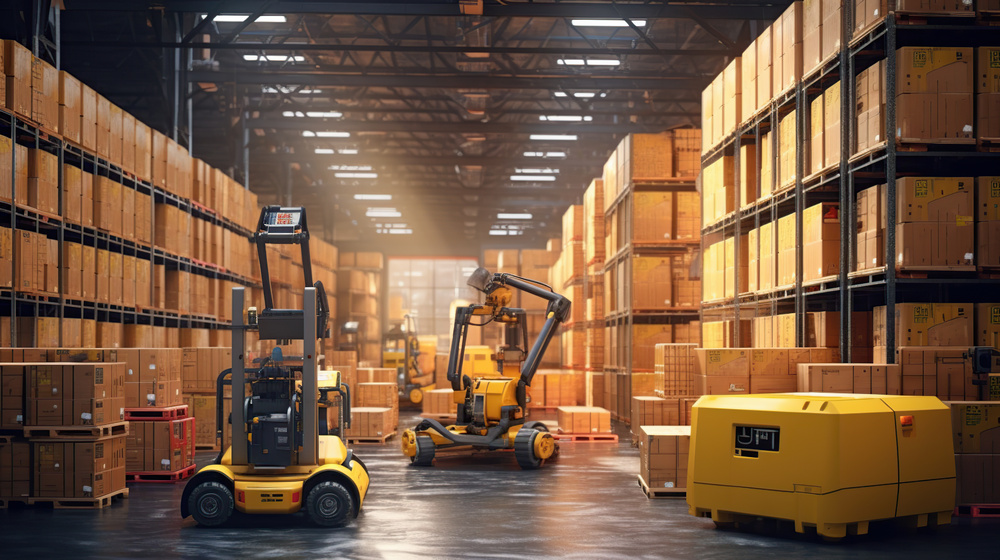
The Warehouse of the Future

Cost Reduction

In addition to increasing productivity, robots can also help reduce costs in the warehouse. With automation, businesses can save on labor costs, as fewer human workers are needed to perform repetitive tasks. Robots also have a longer lifespan than human workers and require less maintenance and supervision, further reducing operational costs. The initial investment in robotics technology may be high, but over time, the cost savings can be significant.

Improved Safety and Working Conditions

Working in a warehouse can be physically demanding and often involves repetitive motions that can lead to injuries or strain. Incorporating robots into the warehouse can help reduce the risk of workplace injuries and improve working conditions for employees. Robots can take on the more dangerous or physically demanding tasks, such as heavy lifting or working in hazardous environments, allowing humans to focus on tasks that require creativity or problem-solving skills. This can lead to a more engaged and motivated workforce and ultimately contribute to the success of the business.

Challenges and Considerations

While there are numerous benefits to incorporating robotics into the warehouse, there are also some challenges to consider. The initial investment in robotics technology can be significant, and it may take time to realize the cost savings and productivity benefits. Additionally, there may be a need for retraining and re skilling of the workforce to work alongside robots effectively. There may also be concerns about the impact of automation on job security, as some positions may become obsolete with the increased use of robots.

Another consideration is the need for cybersecurity measures to protect the robotics technology from hacking or other cyber threats. As the reliance on robotics grows, so too does the risk of a cyber attack that could disrupt operations or compromise sensitive data. Businesses must implement robust cybersecurity measures to ensure the safety and security of the warehouse.

Conclusion

As the world becomes increasingly automated, the role of robotics in the warehouse of tomorrow will continue to grow. The benefits of incorporating robotics into the warehouse are clear, including increased efficiency, productivity, and cost savings, as well as improved safety and working conditions for employees. However, there are also challenges to consider, such as the initial investment in robotics technology, retraining of the workforce, and the need for robust cybersecurity measures. By addressing these challenges and taking advantage of the benefits of robotics, businesses can position themselves for success in the warehouse of tomorrow.

How to Streamline Your Warehouse Operations with Six Sigma

0

At our company, we understand the importance of having an efficient and streamlined warehouse operation. That’s why we have implemented Six Sigma methodologies to ensure that our warehouse is operating at the highest level possible. If you’re looking to streamline your warehouse operations, read on to learn how Six Sigma can help.

Contents

What is Six Sigma?

Six Sigma is a methodology used to improve business processes by identifying and removing the causes of defects and minimizing variability in manufacturing and business processes. It was developed by Motorola in the mid-1980s and has since been adopted by many companies around the world. The goal of Six Sigma is to achieve a level of quality that results in no more than 3.4 defects per million opportunities.

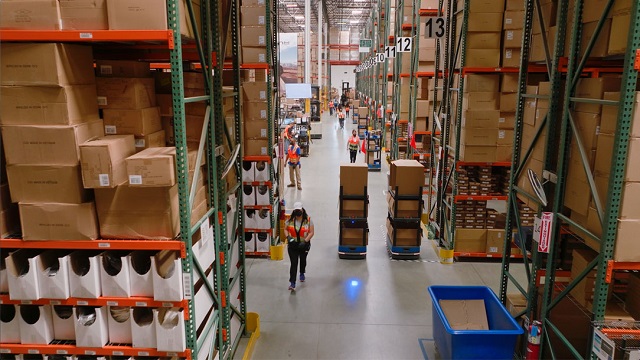
Warehouse Operations Archives - 6 River Systems

How can Six Sigma help streamline warehouse operations?

Implementing Six Sigma methodologies in your warehouse operation can help you identify and eliminate inefficiencies and reduce waste. Here are some ways that Six Sigma can help streamline your warehouse operations:

  1. Define the problem: The first step in implementing Six Sigma is to define the problem. This means identifying the specific issue that is causing inefficiencies in your warehouse operation. This could be anything from excessive inventory levels to poor layout and organization of the warehouse.
  2. Measure the process: The next step is to measure the process. This involves gathering data on the current state of your warehouse operation. This data can be used to identify areas that need improvement and to set a baseline for future improvement.
  3. Analyze the data: Once you have gathered data on your warehouse operation, you need to analyze it to identify the root cause of the problem. This involves using statistical analysis tools to determine which factors are contributing to the inefficiencies in your warehouse operation.
  4. Improve the process: After identifying the root cause of the problem, you can begin to make improvements to your warehouse operation. This could involve reorganizing the warehouse layout, improving inventory management practices, or implementing new technology to streamline processes.
  5. Control the process: The final step in implementing Six Sigma is to control the process. This means establishing procedures and controls to ensure that the improvements you have made are sustained over time.

Benefits of using Six Sigma in your warehouse operation

By implementing Six Sigma methodologies in your warehouse operation, you can achieve a number of benefits, including:

  1. Increased efficiency: Six Sigma can help you identify and eliminate inefficiencies in your warehouse operation, resulting in increased efficiency and productivity.
  2. Improved quality: By reducing variability in your processes, Six Sigma can help you improve the quality of your products and services.
  3. Reduced costs: By eliminating waste and improving efficiency, Six Sigma can help you reduce costs associated with your warehouse operation.
  4. Better customer satisfaction: By improving the quality of your products and services, Six Sigma can help you improve customer satisfaction.
  5. Competitive advantage: By implementing Six Sigma, you can gain a competitive advantage over other companies in your industry that are not using these methodologies.

Conclusion

If you’re looking to streamline your warehouse operations and improve efficiency, Six Sigma is a powerful tool that can help. By following the five steps of Six Sigma and implementing improvements to your warehouse operation, you can achieve a number of benefits, including increased efficiency, improved quality, reduced costs, better customer satisfaction, and a competitive advantage in your industry.

The Future of Warehousing: Trends to Watch Out For

0

The future of warehousing is rapidly changing, and it’s essential to stay updated with the latest trends. As we move towards a more digitalized world, it’s crucial to adapt to new technologies and strategies that can help your business stay ahead of the competition.

In this article, we will discuss some of the top trends that are shaping the future of warehousing. By understanding these trends, you can prepare your business for the future and stay ahead of the curve.

Contents

1. Automation and Robotics in Warehousing

Automation and robotics are transforming the warehousing industry, making it more efficient and cost-effective. Automated systems and robotics can handle repetitive and mundane tasks, reducing labor costs and increasing efficiency. With automation, businesses can process orders faster, reducing the turnaround time and improving customer satisfaction.

Furthermore, robots can work around the clock, increasing productivity and reducing lead times. Automated systems can also reduce the risk of errors, improving accuracy and reducing waste.

Breaking Down Warehouse Operating Costs - iGPS Logistics, LLC

2. IoT in Warehousing

The Internet of Things (IoT) is becoming increasingly prevalent in the warehousing industry. IoT devices can collect and analyze data in real-time, providing businesses with valuable insights into their operations. IoT sensors can monitor temperature, humidity, and other environmental factors, ensuring that products are stored in optimal conditions.

Moreover, IoT devices can track inventory levels, reducing the risk of stock outs and overstocking. By analyzing data from IoT devices, businesses can optimize their supply chain, reducing costs and improving efficiency.

3. Cloud-Based Warehouse Management Systems

Cloud-based warehouse management systems (WMS) are becoming increasingly popular, enabling businesses to manage their warehouse operations from anywhere in the world. Cloud-based WMS can provide businesses with real-time visibility into their inventory levels, order statuses, and shipping information.

Cloud-based WMS can also integrate with other software systems, such as enterprise resource planning (ERP) systems, making it easier to manage your business operations from a single platform. With cloud-based WMS, businesses can reduce costs, improve efficiency, and streamline their operations.

4. 3D Printing in Warehousing

3D printing is another trend that is transforming the warehousing industry. With 3D printing, businesses can produce parts and products on demand, reducing lead times and inventory costs. 3D printing can also enable businesses to create customized products, providing a competitive edge.

Moreover, 3D printing can reduce waste, as businesses can produce only what they need, reducing excess inventory. With 3D printing, businesses can improve their flexibility, reduce costs, and improve customer satisfaction.

5. Augmented Reality in Warehousing

Augmented reality (AR) is becoming increasingly prevalent in the warehousing industry, providing workers with real-time information and training. With AR, workers can receive instructions and guidance in real-time, reducing the risk of errors and improving efficiency.

Moreover, AR can enable businesses to conduct remote training sessions, reducing travel costs and improving productivity. With AR, businesses can improve their training programs, reduce costs, and improve safety.

Conclusion

The future of warehousing is rapidly changing, and it’s crucial to stay updated with the latest trends. By understanding the trends mentioned in this article, you can prepare your business for the future and stay ahead of the competition.

Automation and robotics, IoT, cloud-based WMS, 3D printing, and AR are just some of the trends that are transforming the warehousing industry. By embracing these technologies, businesses can reduce costs, improve efficiency, and stay competitive.

In summary, the future of warehousing is digital, automated, and optimized. By embracing new technologies and strategies, businesses can stay ahead of the curve and thrive in a rapidly changing industry.

The Challenges of Warehouse Logistics and How to Overcome Them

0

Warehouse logistics can be a complex and challenging process, and many businesses struggle to optimize their warehouse operations effectively. Whether you are managing a small or large warehouse, there are many challenges that you may face, such as increasing efficiency, reducing costs, and improving customer satisfaction.

In this article, we will explore some of the common challenges of warehouse logistics and provide practical solutions to help you overcome them.

Contents

1. Lack of space

One of the biggest challenges of warehouse logistics is a lack of space. As your business grows, so does your inventory, and you may find that you are quickly running out of space to store your products. This can lead to a range of problems, such as slower order fulfillment times, reduced productivity, and increased operational costs.

To overcome this challenge, consider implementing a vertical storage system that maximizes your available space. You can also optimize your warehouse layout to ensure that your most popular products are easily accessible, while less popular items are stored in less accessible areas.

What is Warehouse Logistics? Challenges, Benefits, and Best Practices -  Camcode

2. Inefficient inventory management

Another common challenge in warehouse logistics is inefficient inventory management. This can include poor inventory tracking, inaccurate stock levels, and slow restocking times. Inefficient inventory management can lead to stock shortages, missed sales opportunities, and reduced customer satisfaction.

To overcome this challenge, implement a robust inventory management system that tracks all inventory movements and provides real-time stock levels. You can also use demand forecasting tools to predict future sales and ensure that you always have enough stock to meet customer demand.

3. Lack of automation

Manual processes in warehouse logistics can be time-consuming and error-prone, leading to reduced productivity and increased operational costs. Lack of automation can also result in poor accuracy, which can lead to shipping errors and damaged products.

To overcome this challenge, consider implementing automation solutions such as barcode scanners, conveyor systems, and automated picking and packing systems. These technologies can streamline your warehouse operations, reduce errors, and increase productivity.

4. Poor communication

Effective communication is essential for successful warehouse logistics, but it can be challenging to maintain clear and timely communication across all levels of your organization. Poor communication can lead to delayed orders, increased costs, and reduced customer satisfaction.

To overcome this challenge, ensure that all employees are trained on effective communication techniques and have access to communication tools such as messaging apps and internal chat systems. Regular team meetings and performance reviews can also help to identify and address communication issues.

5. Increased competition

In today’s competitive business landscape, warehouse logistics can be a key differentiator for your business. However, increased competition can make it challenging to stand out from the crowd and offer a unique value proposition.

To overcome this challenge, focus on providing exceptional customer service and fast order fulfillment times. Consider implementing a range of delivery options, such as next-day delivery or same-day delivery, to provide a convenient and efficient service to your customers.

Conclusion

Warehouse logistics can be a complex and challenging process, but with the right strategies and tools, you can optimize your warehouse operations and overcome these challenges. By focusing on efficient inventory management, automation, effective communication, and exceptional customer service, you can stand out from the competition and provide a valuable service to your customers.

How to Effectively Manage Warehouse Inventory

0

Effective warehouse inventory management is crucial for any business that wants to optimize its operations and improve customer satisfaction. Poor inventory management can lead to stock outs, overstocking, and other issues that can hurt a business’s bottom line. In this article, we will discuss the best practices for managing warehouse inventory effectively.

Contents

Utilize Inventory Management Software

Using inventory management software can help businesses track inventory levels, set up reorder points, and monitor product movement. This software can also generate reports that provide insights into inventory trends and help businesses identify areas for improvement.

Organize Your Warehouse Space

Organizing your warehouse space is essential to efficient inventory management. This involves creating a layout that optimizes the use of available space and ensures that products are easy to locate. One way to do this is to use vertical storage solutions such as pallet racking and mezzanine floors. Additionally, labeling systems and clear signage can make it easier for employees to find products quickly.

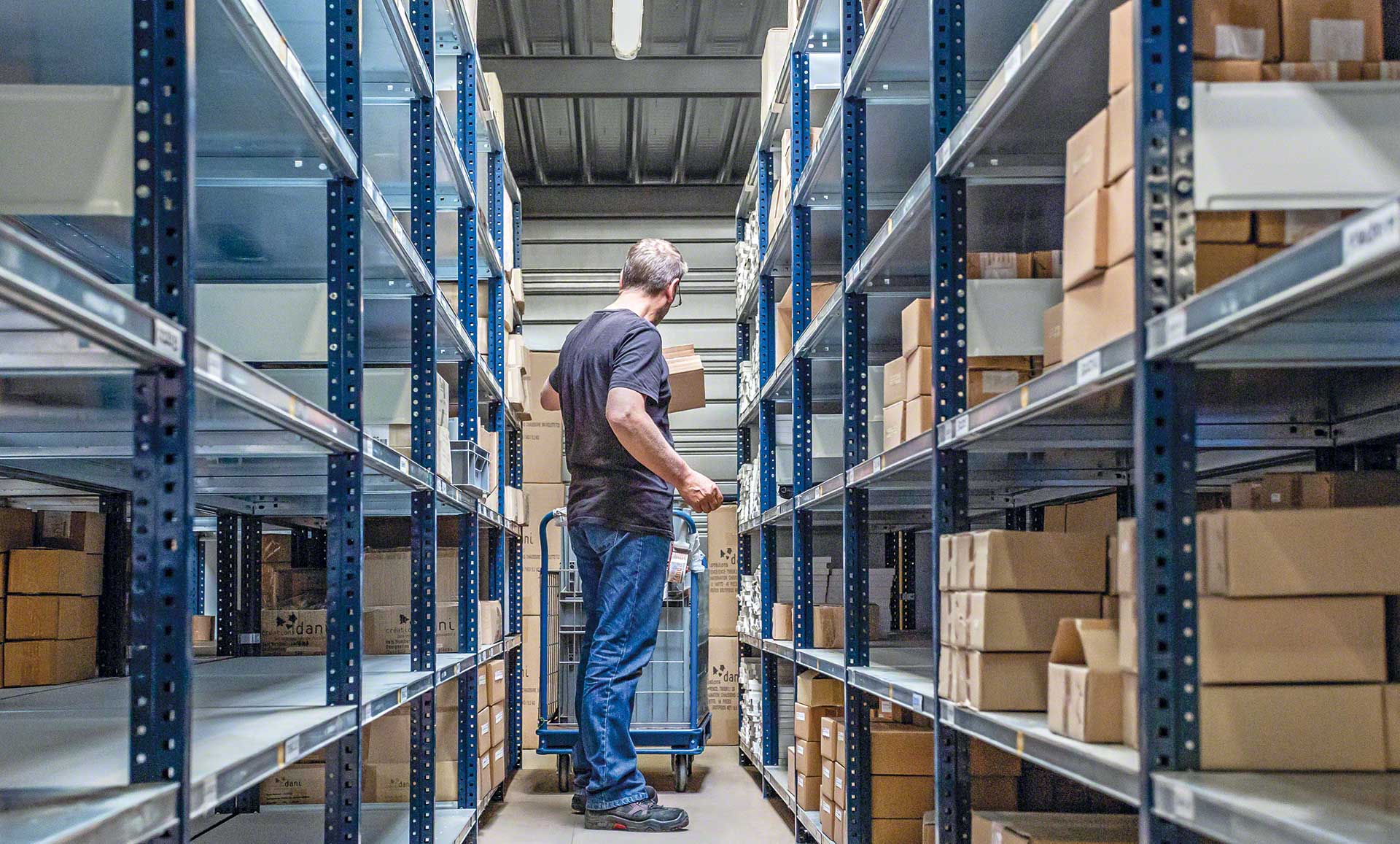
What is inventory management? - Mecalux.com

Implement a FIFO Inventory System

First in, first out (FIFO) is an inventory management system that ensures that the oldest products are sold first. This system helps businesses reduce waste and spoilage and ensures that products are sold before they become obsolete. Implementing a FIFO system can be done manually or through inventory management software.

Conduct Regular Audits

Regular audits of inventory levels can help businesses identify discrepancies and prevent theft or loss of products. Audits can also help businesses track trends in inventory levels and identify areas for improvement. It’s essential to conduct audits regularly to ensure that inventory levels are accurate and up-to-date.

Optimize Inventory Levels

Maintaining the right level of inventory is crucial to keeping costs down and ensuring that products are available when customers need them. Businesses should determine the optimal level of inventory by analyzing sales trends, lead times, and other factors. Setting up reorder points and safety stock levels can help businesses avoid stock outs and overstocking.

Improve Communication Between Departments

Effective communication between departments is essential to efficient inventory management. Sales teams, for example, should provide forecasts to inventory managers to help them plan for demand. Similarly, inventory managers should keep the production team informed about inventory levels to ensure that they have the materials they need to fulfill orders.

Train Employees Effectively

Training employees on inventory management best practices can help businesses optimize their operations and reduce errors. This training should cover topics such as inventory counting, labeling, and tracking. Additionally, employees should be trained to use inventory management software effectively.

Implement Quality Control Processes

Implementing quality control processes can help businesses identify and correct issues before products reach customers. These processes can include product inspections, testing, and other quality checks. By ensuring that products meet high standards, businesses can improve customer satisfaction and reduce returns and other issues.

Monitor KPIs

Monitoring key performance indicators (KPIs) such as inventory turnover, stock outs, and order fulfillment rates can help businesses identify areas for improvement and track progress over time. By monitoring KPIs regularly, businesses can ensure that they are on track to meet their inventory management goals.

Conclusion

Effective warehouse inventory management is critical to the success of any business. By utilizing inventory management software, organizing warehouse space, implementing a FIFO inventory system, conducting regular audits, optimizing inventory levels, improving communication between departments, training employees effectively, implementing quality control processes, and monitoring KPIs, businesses can optimize their operations and improve customer satisfaction. By implementing these best practices, businesses can outrank their competitors and achieve long-term success.

The Advantages of Lean Warehousing for Your Business

0

In today’s fast-paced business environment, companies are constantly searching for ways to increase their efficiency and streamline their operations. One area that has seen significant growth and innovation in recent years is warehousing. The concept of lean warehousing has emerged as a powerful tool for businesses to improve their operational efficiency and reduce costs. In this article, we will explore the advantages of lean warehousing and why it is becoming an increasingly popular option for businesses of all sizes.

Contents

What is Lean Warehousing?

Lean warehousing is a concept that is based on the principles of lean manufacturing. The goal of lean warehousing is to eliminate waste and improve efficiency in all aspects of the warehouse operation. This includes everything from the layout of the warehouse to the way inventory is managed. The principles of lean warehousing focus on creating a streamlined and efficient operation that maximizes productivity while minimizing waste and unnecessary expenses.

Top 5 Reasons Why a Warehouse Management System Is Important

Advantages of Lean Warehousing

1. Increased Efficiency

The most significant advantage of lean warehousing is the increased efficiency it provides. By eliminating waste and optimizing processes, businesses can operate more efficiently and with greater speed. This means that products can be delivered to customers more quickly, and businesses can reduce their lead times, improving customer satisfaction.

2. Reduced Costs

Lean warehousing can also help businesses reduce their costs significantly. By eliminating waste and optimizing processes, businesses can reduce their expenses, which can have a significant impact on their bottom line. This includes reducing costs associated with inventory management, labor, and transportation.

3. Improved Inventory Management

Effective inventory management is critical for businesses of all sizes, and lean warehousing can help companies manage their inventory more effectively. By optimizing the layout of the warehouse and implementing efficient inventory management systems, businesses can reduce their inventory levels while still meeting customer demand.

4. Increased Flexibility

Lean warehousing can also help businesses increase their flexibility and adaptability. By optimizing processes and reducing waste, businesses can respond more quickly to changes in demand or unexpected events. This means that businesses can adjust their operations more quickly and effectively, reducing the impact of disruptions on their supply chain.

5. Improved Quality Control

Quality control is a critical aspect of any business, and lean warehousing can help businesses improve their quality control processes. By reducing waste and optimizing processes, businesses can identify and address quality control issues more quickly, improving the overall quality of their products and services.

6. Competitive Advantage

Finally, lean warehousing can provide businesses with a significant competitive advantage. By operating more efficiently and reducing costs, businesses can offer their products and services at a lower price point, making them more attractive to customers. Additionally, by reducing lead times and improving quality control, businesses can improve their reputation and gain a competitive edge in their industry.

Conclusion

Lean warehousing is a powerful tool for businesses looking to improve their operational efficiency and reduce costs. By focusing on eliminating waste and optimizing processes, businesses can operate more efficiently, reduce their costs, and gain a competitive advantage in their industry. Whether you are a small business or a large corporation, lean warehousing can help you streamline your operations and achieve your business goals. If you are looking for ways to improve your warehouse operations, consider implementing lean warehousing principles and see the benefits for yourself.

Understanding the Building Certification Process

1

Building certification is an essential process for ensuring that buildings are designed, constructed, and operated to meet specific sustainability and environmental standards. Building certification programs such as LEED (Leadership in Energy and Environmental Design) and BREEAM (Building Research Establishment Environmental Assessment Method) have gained popularity in recent years as the world becomes more conscious of sustainability and climate change. However, the building certification process can be complex and daunting for those unfamiliar with it. In this article, we will provide an overview of the building certification process to help building owners, architects, and other stakeholders better understand the process.

Contents

What is Building Certification?

Building certification is a process that assesses and verifies the sustainability and environmental performance of a building. The process evaluates the building’s design, construction, and operation to ensure that it meets specific standards for sustainability and environmental performance.

The 10 Most Popular Green Building Certifications

Building certification programs use a set of criteria to evaluate the building’s performance in several areas such as energy efficiency, water efficiency, indoor air quality, material selection, waste reduction, and site selection. These criteria vary depending on the certification program, and some programs have additional criteria specific to their program.

The Building Certification Process

The building certification process typically involves the following steps:

Step 1: Determine the Applicable Certification Program

The first step in the building certification process is to determine which certification program is most applicable to the building being assessed. The choice of program will depend on various factors such as the building type, location, and the owner’s sustainability goals.

Step 2: Identify the Certification Level

The second step is to identify the certification level that the building owner wants to achieve. Most certification programs offer different levels of certification, such as bronze, silver, gold, and platinum. The certification level will depend on the building owner’s sustainability goals and budget.

Step 3: Assess the Building

Once the certification program and level have been identified, the building must be assessed. The assessment process evaluates the building’s performance in various areas such as energy efficiency, water efficiency, indoor air quality, material selection, waste reduction, and site selection. The assessment is usually carried out by an accredited assessor who will evaluate the building against the criteria of the certification program.

Step 4: Identify Opportunities for Improvement

Based on the assessment, opportunities for improvement will be identified. These opportunities will help the building owner to understand what actions need to be taken to improve the building’s performance and achieve the desired certification level.

Step 5: Implement Changes

After identifying the opportunities for improvement, the building owner can implement changes to the building’s design, construction, or operation. These changes may include upgrading lighting systems, installing low-flow water fixtures, using sustainable materials, or improving the building’s insulation.

Step 6: Submit Documentation

Once the changes have been implemented, the building owner must submit documentation to the certification program to demonstrate that the building meets the criteria for certification. The documentation may include drawings, specifications, and other relevant documents.

Step 7: Certification Review

The final step is the certification review. The certification program will review the documentation and assess the building’s performance against the criteria for certification. If the building meets the criteria, the certification program will issue a certificate of certification.

Benefits of Building Certification

Building certification provides several benefits to building owners and occupants, including:

  • Improved environmental performance and sustainability
  • Reduced operating costs through energy and water efficiency measures
  • Improved indoor air quality, leading to improved occupant health and productivity
  • Enhanced building value and marketability
  • Reduced environmental impact and carbon footprint
  • Recognition as a leader in sustainable building practices

The Evolution of Building Certification Standards

0

As the world becomes more environmentally conscious, it’s essential that buildings become more energy-efficient, sustainable, and safe. Building certification standards are an integral part of ensuring that a building is up to par with the latest codes and regulations. In this article, we will discuss the evolution of building certification standards and how they have changed over time to meet the needs of our changing world.

Contents

The Beginning of Building Certification Standards

In the early 1900s, building codes were primarily focused on safety concerns, such as fire safety, structural integrity, and sanitation. As technology advanced and environmental awareness grew, codes began to include energy efficiency and sustainability requirements.

The first modern building certification program was established in the United States in the 1970s. The Energy Efficient Building Program was created to encourage the construction of energy-efficient buildings, and it served as a model for future certification programs.

The Safari Green Building Index 2021 | CK

LEED Certification

In 1993, the US Green Building Council (USGBC) was established, and it introduced Leadership in Energy and Environmental Design (LEED) certification in 2000. LEED is a voluntary certification program that rates buildings on their energy efficiency, water use, indoor air quality, and materials selection. It was designed to promote sustainable building practices and encourage the use of green building materials.

LEED quickly became the gold standard for building certification and has been adopted by over 167 countries worldwide. The certification process is rigorous and requires extensive documentation of building materials, energy use, and indoor air quality.

BREEAM Certification

The Building Research Establishment Environmental Assessment Method (BREEAM) was established in the United Kingdom in 1990. BREEAM is similar to LEED, but it was designed to meet the specific needs of the UK building industry.

BREEAM rated buildings on their energy efficiency, water use, indoor air quality, and materials selection, and it also includes categories for ecology, pollution, and transport. BREEAM has become the dominant certification standard in the UK and has been adopted in over 77 countries worldwide.

Passive House Certification

The Passive House Institute was founded in Germany in 1996 to promote energy-efficient building practices. Passive House certification is based on the Passive House Standard, which was developed to create buildings that are up to 90% more energy-efficient than traditional buildings.

Passive House certification focuses on building design and energy use, and it does not include criteria for materials selection or indoor air quality. The certification process is rigorous and requires extensive documentation of building materials and energy use.

Living Building Challenge Certification

The Living Building Challenge (LBC) was established in 2006 by the International Living Future Institute. LBC certification is the most rigorous building certification standard, and it requires buildings to be net-zero energy, net-zero water, and carbon neutral.

LBC certification also includes requirements for materials selection, indoor air quality, and social equity. The certification process is extensive and requires a long-term commitment to sustainable building practices.

The Future of Building Certification Standards

As the world continues to evolve, so too will building certification standards. The focus on sustainability and energy efficiency will only increase, and certification programs will need to adapt to meet these changing needs.

One emerging trend in building certification is the use of digital technology. Building information modeling (BIM) is a technology that allows architects and builders to create detailed digital models of buildings before construction begins. BIM technology is being integrated into building certification programs to improve the accuracy and efficiency of the certification process.

Another emerging trend is the use of blockchain technology to track building materials and ensure that they meet sustainability standards. Blockchain technology allows for a secure and transparent tracking system that can verify the origin and sustainability of building materials.

Building Certification and the Future of Construction

1

At present, the construction industry is undergoing significant changes to address environmental concerns and sustainability. This transition towards more sustainable construction practices has been motivated by the need to reduce carbon footprints and increase energy efficiency in buildings. As a result, building certification has become an essential aspect of construction, particularly for commercial buildings.

Building certification is a process that ensures a building meets specific standards and regulations set by a governing body. These standards may vary depending on the location and type of building, but the primary goal of certification is to promote sustainability, safety, and energy efficiency. With the increasing demand for sustainable and energy-efficient buildings, building certification is becoming an indispensable part of the construction process.

Mumbai has the highest construction cost among top six metros: Report, ET  RealEstate

The certification process typically involves a thorough evaluation of a building’s design, construction, and operation. The governing body responsible for certification may assess various aspects of the building, including its energy and water efficiency, indoor air quality, waste management, and use of sustainable materials. Buildings that meet the set standards are awarded a certification, which may range from basic to advanced levels, depending on the extent of compliance.

Building certification has numerous benefits, both for building owners and occupants. For building owners, certification is an excellent way to enhance the market value of their property. Certified buildings are more attractive to potential tenants, who are increasingly concerned about sustainability and energy efficiency. Additionally, certification can help reduce the operating costs of a building by promoting energy-efficient practices and reducing waste.

For occupants, certified buildings provide a healthier and more comfortable environment to live or work in. Certification standards often require buildings to have better indoor air quality, which can reduce the risk of respiratory illnesses. Additionally, certification promotes the use of sustainable materials, which can improve the overall environmental impact of the building.

The future of construction is closely tied to building certification, as the demand for sustainable and energy-efficient buildings continues to increase. Certification standards are likely to become more stringent, promoting the use of renewable energy sources and reducing waste generation. Furthermore, new technology and innovations in building materials and design are likely to drive the adoption of certification standards further.

One emerging trend in sustainable construction is the use of green roofs. Green roofs are an excellent way to improve the energy efficiency of a building while also providing additional benefits such as storm water management and improved air quality. The installation of a green roof may also contribute to the attainment of building certification.

Another emerging trend in sustainable construction is the use of mass timber. Mass timber is a sustainable alternative to traditional building materials such as concrete and steel. It is made from wood harvested from sustainably managed forests and has a lower carbon footprint than traditional building materials. Additionally, mass timber is lightweight, easy to transport and assemble, and has excellent thermal properties.

The adoption of certification standards is also likely to drive innovation in construction technology. One example of such innovation is Building Information Modeling (BIM). BIM is a digital tool that enables the modeling of building designs in 3D, allowing for more accurate and efficient planning and construction. BIM can also help identify potential design flaws before construction, reducing waste and improving overall sustainability.

Conclusion

Building certification is an essential aspect of the construction industry, particularly in promoting sustainability and energy efficiency. Certification benefits building owners, occupants, and the environment, making it an indispensable part of the construction process. As the demand for sustainable and energy-efficient buildings continues to increase, certification standards are likely to become more stringent, promoting the use of innovative materials and technologies in construction.